



Cruise Scam Emails: Protect Your Booking and Personal Data
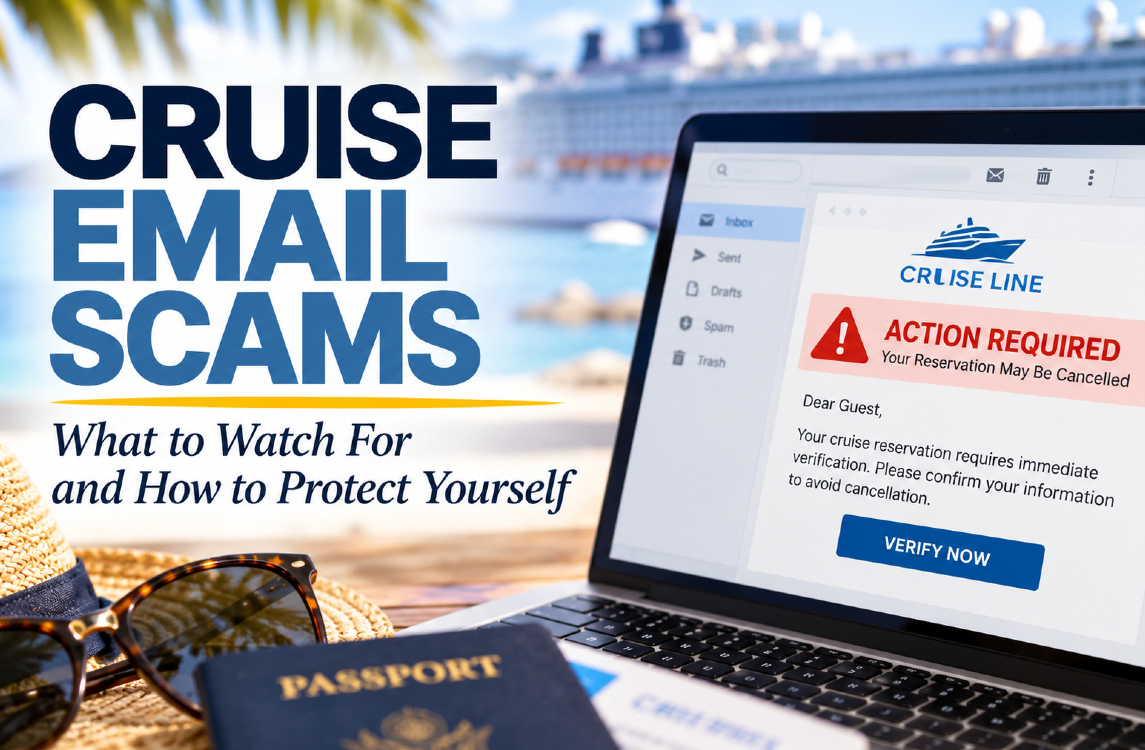
Cruise Scam Emails: Don't Let a Fraudulent Message Put Your Vacation at Risk
Fraudulent cruise line emails can contain real reservation details, urgent demands, and threats of cancellation. Here's what every cruise traveler needs to know.
Imagine receiving an email that appears to come directly from your cruise line. It includes your name, ship, sailing date, and reservation number. It may even reference your cabin assignment or payment information. Everything looks official until you reach the warning: Your reservation is at risk of cancellation unless you immediately verify your information, complete an additional check-in, or provide payment details.
These messages are designed to frighten travelers into acting quickly, and they can be remarkably convincing.
WARNING: Just because an email contains your actual cruise reservation information does NOT mean it came from your cruise line.
Why These Emails Are So Concerning
Cruise-related phishing scams are becoming increasingly sophisticated. Fraudulent messages may reproduce cruise line logos, reservation formats, and familiar terminology, making them difficult to distinguish from legitimate communications. Some reportedly include accurate booking information, which creates an especially dangerous sense of credibility.
Scammers frequently use threats of cancellation, missed payments, incomplete check-in requirements, or problems with travel documents to create urgency. Their goal is to persuade travelers to click a fraudulent link, call a fake customer service number, or disclose personal and financial information before they have time to question the request.
Cruise lines do send legitimate reminders about payments, online check-in, and required documentation. That is precisely what makes these scams effective. Travelers are accustomed to receiving important information before departure, and criminals take advantage of that expectation.
NEVER provide passport details, credit card information, passwords, or other sensitive information in response to an unexpected email without independently verifying the request.
Your Reservation Number Is NOT Proof of Identity
One of the most dangerous assumptions travelers can make is that someone must represent the cruise line because they know the details of a reservation. Names, sailing dates, cabin numbers, and payment information can appear in fraudulent communications, and a professionally written message with familiar branding is no guarantee of authenticity.
Even if every reservation detail is correct, the sender may still be attempting to steal your information or money. Treat any unexpected request for sensitive information, additional payment, or immediate action with caution.
Accurate booking information does not make a suspicious email legitimate.
Don't Let Threats of Cancellation Intimidate You
Scammers know that travelers have invested considerable time and money in their vacations. A warning that your cabin will be released, your reservation canceled, or your final payment forfeited can create immediate anxiety, particularly when departure is approaching.
That emotional pressure is intentional. A fraudulent message may insist that you have only a few hours to respond or that failure to complete a verification process will result in losing your cruise. Rather than reacting to the threat, take control of the situation by independently confirming whether any action is actually required.
STOP. Do not click the link, call the number in the email, or submit payment. Contact your travel advisor or cruise line through a trusted channel first.
Never Google a Cruise Line's Customer Service Number
This is an important warning that many experienced travelers may not realize. Searching Google for a cruise line's customer service number can lead to fraudulent advertisements, misleading listings, or imitation websites designed to look official. Criminals may use these results to direct travelers to telephone numbers answered by people impersonating cruise line representatives.
A scammer who answers the phone may sound professional, understand cruise terminology, and offer convincing explanations for unexpected charges or reservation problems. Once a traveler believes they have reached the cruise line, the scammer may request payment or personal information under the guise of resolving an urgent issue.
DO NOT rely on a Google search result for your cruise line's telephone number.
Instead, enter the cruise line's known official website address directly into your browser and locate its contact information there. If you already have a verified number saved from previous communications, you can use that as well. Never call a number supplied in a suspicious email, text message, pop-up advertisement, or unfamiliar search listing.
Your Travel Advisor Should Be Your First Call
One of the advantages of booking through a professional travel advisor is having a trusted contact who knows your reservation and can help you navigate unexpected problems. You should never feel pressured to respond immediately to an intimidating message simply because it appears to come from your cruise line.
At Cruisy Susie & Crew, we encourage our clients to contact us directly whenever they receive a questionable email, telephone call, or text message concerning their cruise. Whether the message involves a payment request, reservation change, travel document, or check-in requirement, we can help verify the situation through established cruise line channels.
Our clients: If something about your reservation seems suspicious, CALL US FIRST. Do not respond to the message until we've helped you verify it.
What If You've Already Responded?
If you've clicked a suspicious link but haven't entered any information, close the page and avoid further interaction. If you've provided a password, change it immediately by visiting the legitimate website directly, and update any other accounts where you've used the same password.
If you've shared credit card or banking information, contact your financial institution immediately to report the potential fraud and discuss protective measures. Travelers who have disclosed passport details or other sensitive identifying information should seek additional guidance through IdentityTheft.gov and the appropriate issuing authority. Save the suspicious message and report it to your travel advisor and the cruise line so they can investigate.
The sooner you act after recognizing a possible scam, the better your chances of limiting the damage.
One Rule Every Cruise Traveler Should Remember
Planning a cruise should be exciting, not an opportunity for criminals to intimidate you into revealing personal information or making fraudulent payments. Unfortunately, these scams are convincing enough that even experienced travelers can be caught off guard, especially when a message contains accurate reservation information.
STOP. VERIFY. THEN ACT.
Never assume a message is legitimate because it contains your booking number. Never allow threats of cancellation to rush you into providing sensitive information. Never trust an unfamiliar telephone number simply because it appears in a search result.
Contact your travel advisor directly, or independently visit the cruise line's official website. When in doubt, make the call yourself using contact information you already trust.
A few extra minutes of verification can protect your personal information, your money, and the vacation you've worked so hard to plan.
Read Next: How to Avoid Cruise and Airline Phone Scams
Fraudulent emails aren't the only threat to travelers. Scammers also impersonate cruise lines and airlines over the phone, sometimes using fake customer service numbers found in online searches. Learn how to recognize these scams and make sure you're speaking with a legitimate representative.
How to Avoid Cruise and Airline Phone Scams →
