


Planning a Group Cruise: Where Do You Start?
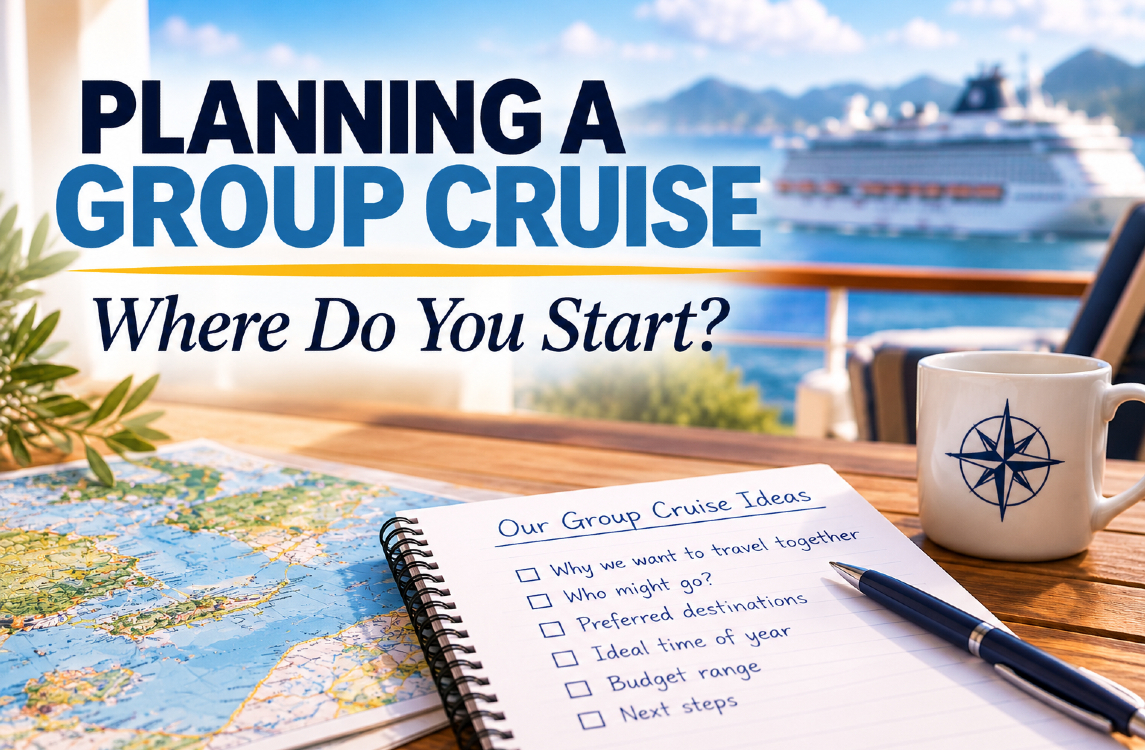
Planning a Group Cruise: Where Do You Start?
Planning a group cruise begins with an honest look at your idea from the perspective of the people you hope will travel. Before choosing a ship or destination, consider why you want to bring everyone together, who might realistically participate, and what would make the vacation appealing and affordable for them. You don't need a finished plan at this stage, but you do need to determine whether your idea has the potential to become a successful group cruise.
Start With a Reason to Travel Together
There is a big difference between a family saying, “We should all take a cruise someday,” and a reunion committee deciding, “Let's bring everyone together next summer.” Both ideas have potential, but the first needs a little more thought before it becomes a plan. Perhaps you're celebrating a milestone birthday, organizing a military reunion, bringing several generations of family together, or gathering friends who share a particular interest. Sometimes there isn't a special occasion at all. You simply want to enjoy a vacation with people whose company you value.
As the prospective group leader, your first question is why these particular people would want to travel together. The answer helps establish what matters most, whether that's reconnecting with old friends, celebrating an occasion, exploring a destination, or enjoying a shared activity. Understanding that purpose gives the idea direction without requiring you to make any decisions about ships, dates, or itineraries.
Is There Really a Group?
Almost every group cruise begins with enthusiasm. Someone suggests a trip over dinner, everyone loves the idea, and suddenly 30 people are going. At least they are in theory. Interest and commitment are two different things, and work schedules, family obligations, budgets, and other vacations eventually enter the conversation. You don't need firm commitments before getting started, but you should have a realistic sense that there is a core group of people who would genuinely make room in their lives for this trip.
It also helps to consider whether certain people's participation is essential. If the purpose is Grandma's 80th birthday, her schedule matters more than everyone else's preferences. A reunion, workshop, or organized event may have several key participants whose availability should influence the planning. Before estimating how many cabins you'll need, ask yourself whether the trip would still be worth organizing if only half the people who initially expressed interest actually booked. It's a practical reality check that can prevent disappointment later.
Look at the Vacation Through Your Guests' Eyes
It's easy to get excited about a particular ship or destination, especially if you've already found a cruise you'd love to take. However, a successful group vacation needs to make sense for the people you're inviting, not just for the person organizing it. Consider where everyone will be traveling from, whether children or older adults will participate, and whether anyone has mobility or accessibility needs. Think about the length of vacation most guests could reasonably manage, their previous travel experience, and the general budget range that would be comfortable for the majority.
You don't need to ask everyone about their personal finances or circulate a lengthy questionnaire. At this stage, you're simply trying to understand the vacation from their perspective. A group of friends who regularly travel internationally may be comfortable with a very different experience than a multigenerational family with young children. Neither is better, but recognizing those differences early can help you avoid proposing a vacation that only a handful of people could realistically enjoy. A useful question is whether you would still recommend the trip if you were traveling under the same circumstances as your guests.
Are You Ready to Be the Pied Piper?
Every successful group needs someone who believes in the idea and is willing to keep it moving. I call that person the group's Pied Piper. It's often the person who suggested the trip, knows the people involved, and has enough enthusiasm to bring everyone together. Some groups have one natural leader, while others have a small committee that shares the responsibility. Either approach can work, provided someone is willing to maintain interest and help the group make decisions.
Being the Pied Piper doesn't mean becoming an amateur travel agent. You shouldn't be collecting credit cards, managing individual reservations, or answering everyone's questions about passports, insurance, and cruise policies. Those responsibilities belong with the travel professional who will eventually help organize the trip. Your value is knowing the people, sharing your enthusiasm, encouraging participation, and keeping the idea alive after the initial excitement fades. Before going further, consider whether you're willing to take on that leadership role or have someone who will share it with you.
Put Your Ideas on Paper Before Asking Everyone to Vote
One of the easiest ways to complicate a group cruise is to begin by asking everyone where they want to go, when they want to travel, and which cruise line they prefer. With 20 or 30 people, that approach can quickly produce dozens of opinions without bringing you any closer to a decision. Instead, use what you've learned about your potential group to sketch out a few broad parameters, including a possible travel season, the general length of the vacation, destinations that might appeal to your guests, and a realistic budget range.
You aren't choosing the cruise yet. You're establishing enough direction to determine what might work and identifying any important limitations before involving the entire group. Flexibility is valuable, particularly when planning well in advance. Groups that can consider more than one departure date or similar destinations often have more opportunities than those committed to a single sailing before they've explored the possibilities. Once you've developed a realistic foundation, a group cruise specialist can help evaluate suitable options, explain how group arrangements work, and guide the next decisions without turning the process into a committee debate.
Your First Step: Complete the Group Cruise Idea Worksheet
You don't need to know which ship to choose, how many cabins to reserve, or how group pricing works to begin exploring your idea. What you need is a clearer understanding of the people, purpose, and practical considerations that will determine whether the trip makes sense. Taking a little time to organize those thoughts can help you recognize both the opportunities and the potential obstacles before making promises or asking others to commit.
That's why we've created the Group Cruise Idea Worksheet. It walks you through the questions we've discussed, helps you organize your thoughts, and gives you an opportunity to identify concerns or questions you may not have considered. There are no wrong answers, and completing the worksheet doesn't obligate you to organize a cruise. Sometimes the most valuable outcome is discovering that an idea needs more time, a different approach, or a smaller group than originally imagined.
Ready to see whether your group cruise idea has real potential?
Start Your Group Cruise Idea Worksheet →
Next Question: What Does a Group Cruise Leader Actually Do?
