


How Do You Turn Group Cruise Interest Into Actual Bookings?
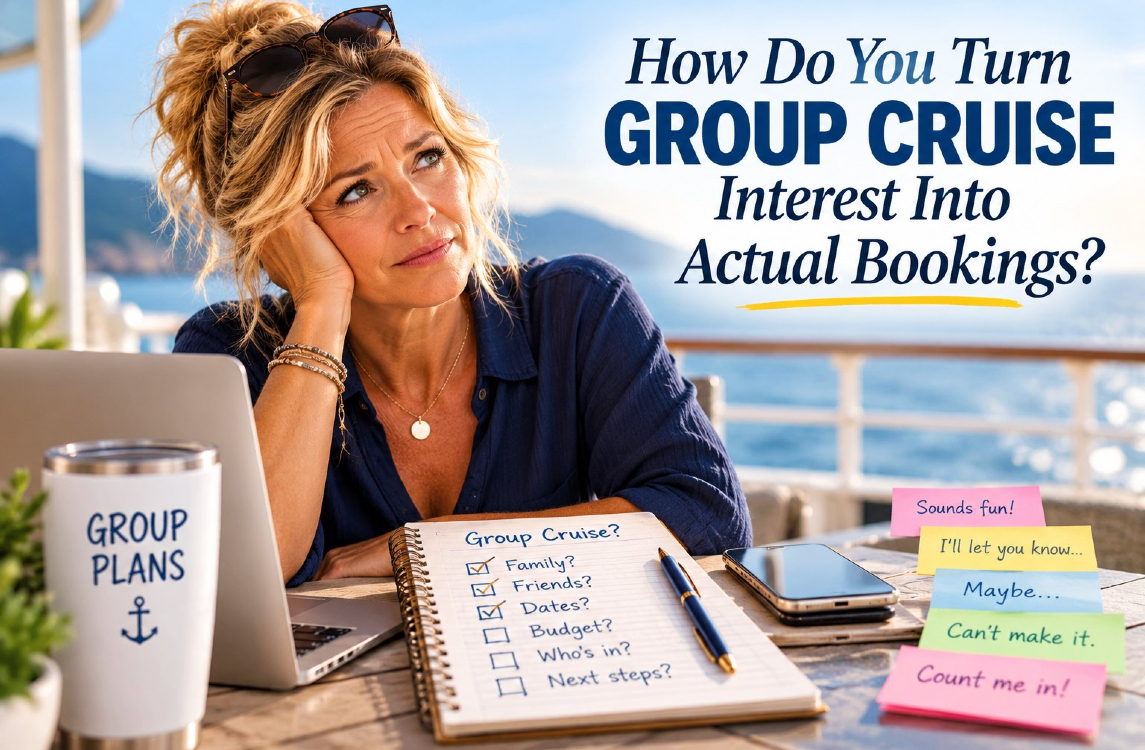
How Do You Turn Group Cruise Interest Into Actual Bookings?
There's something exciting about imagining a vacation with people who matter to you. Perhaps it's a family reunion you've talked about for years, a gathering of old military friends, or a cruise built around an interest everyone shares. You mention the idea, people respond enthusiastically, and suddenly you can picture everyone together, making memories and enjoying an experience that might never happen otherwise.
Then reality begins to settle in.
Someone can't make the dates. Another person needs to think about the cost. A few people who were enthusiastic at first stop responding. Before long, you may find yourself wondering what happened to the wonderful idea everyone seemed so excited about.
If you've experienced this, you're in familiar company. Many group vacation ideas never make it beyond the conversation stage. Bringing people together requires more than an appealing destination or a good price, and even a thoughtfully planned trip won't be right for everyone.
The most successful groups have something that matters more than the cruise itself: a genuine connection, shared passion, or meaningful reason to travel together. That common purpose creates the enthusiasm that brings people to the table. Thoughtful planning, clear communication, and professional support can help turn that enthusiasm into actual reservations, but they cannot create a sense of belonging where one doesn't already exist.
Why Does Everyone Seem Interested Until It's Time to Book?
When someone says, "That sounds wonderful! Count me in!" they may be expressing genuine enthusiasm. They're picturing the destination, the people, and the fun of being together. At that moment, they're not necessarily thinking about vacation schedules, household finances, other commitments, or whether cruising is how they want to spend their next vacation.
Those practical considerations usually arrive later. A family may discover that the dates conflict with school or work. A couple may have another trip planned. Someone may be uncomfortable discussing their financial circumstances, while another simply realizes that the vacation isn't a personal priority.
This is where group organizers can become discouraged. What felt like a shared dream suddenly becomes a series of unanswered messages and uncertain responses. It's natural to wonder whether people were ever serious or whether you've done something wrong.
But enthusiasm and commitment are different things. People can sincerely love an idea without being able or willing to participate. Understanding that distinction helps you approach the planning process with realistic expectations and preserve the relationships that matter far more than any vacation.
What Makes People Want to Travel Together?
Before worrying about how many cabins might be booked, consider what is bringing these particular people together. A successful group needs a reason to gather that is meaningful to its participants, not simply an attractive cruise itinerary.
For a family, that might be the opportunity to bring several generations together while everyone is still able to travel. Military friends may value reconnecting with people who shared an important chapter of their lives. Members of a social club may enjoy extending their friendships beyond regular meetings. A photography group might be excited about exploring new destinations together, while a workshop group may be drawn by the opportunity to learn from someone they admire.
The strength of that connection matters. People are more likely to make room in their schedules and budgets when the experience represents something personally meaningful. A cruise can provide a wonderful setting, but the ship and destination are rarely enough to create a committed group on their own.
Ask yourself a simple question: If the cruise itself weren't part of the conversation, would these people still have a compelling reason to spend time together?
The answer can tell you a great deal about the potential of your group.
How Do You Know Whether Your Group Idea Has Real Support?
A promising group usually begins with a small number of people who genuinely want the experience to happen. They may be the relatives who have talked about a reunion for years, the friends who already travel together, or the club members who are enthusiastic about taking their shared interests somewhere new.
You don't need every potential guest to be equally enthusiastic. What matters is whether there's a dependable core of people who see the trip as something they want to prioritize. Their interest can help you determine whether the idea deserves further exploration.
Have a few personal conversations before making elaborate plans. Ask what appeals to them, whether the general timing is realistic, and what concerns might prevent them from participating. Listen carefully, especially when the answers are less enthusiastic than you'd hoped.
A smaller group with genuine commitment may be a better foundation than a long invitation list filled with uncertain possibilities. And if those early conversations reveal that the timing or concept isn't right, discovering that before making arrangements is useful information, not a failure.
Should You Let Everyone Vote on the Cruise?
It's considerate to ask people what they would enjoy, but trying to satisfy every preference can make a group trip nearly impossible to organize. One person wants Alaska, another prefers the Caribbean, and someone else won't travel during the summer. Add different budgets, cruise line preferences, and vacation lengths, and even a simple getaway can become an endless discussion.
Gather input from the people most likely to participate, then use it to develop a realistic proposal. Consider their circumstances and look for reasonable common ground. You may find that certain dates, destinations, or price ranges simply won't work for enough people.
Eventually, however, the group needs something definite to consider. A clear sailing, approximate vacation investment, and understandable booking process give people the information they need to make a decision.
Not everyone will agree with every choice, and that's okay. The objective isn't unanimous approval. It's to create an appealing, practical opportunity for people who genuinely want to travel together.
How Do You Invite People Without Feeling Like You're Pressuring Them?
For many organizers, this is the most uncomfortable part of group planning. Inviting people to share an experience feels natural. Repeatedly asking whether they've booked can feel awkward, particularly when the people involved are family members, close friends, or colleagues.
The best invitation is personal, enthusiastic, and clear. Explain why you're organizing the trip, what makes the experience special, and why you would enjoy having them join you. Give guests enough information to evaluate the opportunity, including the dates, itinerary, expected costs, and how reservations will be handled.
Then allow people to decide.
A friendly reminder when an important booking deadline approaches is reasonable. Continually pursuing people who have expressed uncertainty rarely improves the experience for anyone. It can strain relationships and turn something enjoyable into an obligation.
Remember that you're offering an opportunity, not asking people to prove their friendship or loyalty. A gracious invitation leaves room for both an enthusiastic yes and a comfortable no.
What Actually Helps People Move From Interest to Booking?
People are more comfortable making decisions when they understand what they're agreeing to. An appealing idea becomes more tangible when guests can see the itinerary, compare accommodation choices, understand the overall vacation investment, and know what steps are required to reserve their place.
This is where working with a Group Cruise Specialist becomes particularly valuable. Rather than expecting the organizer to explain fares, deposits, cancellation conditions, and cabin choices, each interested guest can receive professional assistance with their own reservation.
Clear communication also matters. Guests should have one reliable source for confirmed group information, including booking instructions, important dates, and planned gatherings. Everyone should receive the same essential details, while individual questions about budgets, payments, or travel needs can remain private.
A reasonable booking deadline gives people a point at which to make their decision, particularly when cabin availability or group arrangements are involved. The purpose of that deadline is to help guests understand the opportunity, not to manufacture pressure.
And sometimes, despite every effort, people simply won't book. No planning system can guarantee participation when the personal desire or circumstances aren't there.
How Do You Keep the Group Excited After People Start Booking?
Once the first reservations are made, the trip begins to feel real. Guests can start looking forward to the destinations, the people they'll see, and the experiences they'll share. This is an opportunity for the group leader to nurture the connection that inspired the cruise in the first place.
Share occasional updates that give people something enjoyable to anticipate. Perhaps it's a destination highlight, a proposed welcome gathering, or a story about why the group is coming together. A reunion organizer might invite participants to share old photographs. A special-interest group might begin discussing the experiences they're most excited about.
Keep the communication purposeful rather than constant. People have busy lives, and not everyone wants to participate in a continuous group conversation months before departure. Confirmed travel information should continue to come through the group's established communication channels so important details don't become buried in casual discussions.
The leader's enthusiasm is valuable because it reminds everyone why they're traveling together. It shouldn't become a responsibility to entertain or motivate every guest throughout the planning process.
What If Your Group Doesn't Grow as Expected?
This may be the hardest possibility for an organizer to accept. You've invested time, imagination, and emotional energy into an experience you hoped others would share. Perhaps you pictured a large family reunion, but only a few households reserved cabins. Maybe your club expressed tremendous enthusiasm, yet very few members followed through.
It's disappointing, particularly when the group includes people you care about. But a smaller response doesn't erase the value of the idea or the relationships behind it.
Sometimes the best choice is to proceed with a smaller group. A handful of friends or relatives may enjoy a wonderful vacation together, even if it looks different from the original vision. In other situations, postponing the trip, changing the destination, or revisiting the concept later may make more sense.
Certain group benefits, private events, or program arrangements may depend on participation, so discuss the practical implications with your Group Cruise Specialist before making changes.
Most importantly, don't feel obligated to carry a trip forward simply because you were the person who suggested it. A group vacation should be something people look forward to, including the organizer.
What Is the Group Leader Really Responsible For?
A group leader is the person who brings people together around a shared idea. Sometimes that means inviting relatives to celebrate an anniversary. Sometimes it means encouraging former colleagues to reconnect, or helping club members imagine a vacation built around their common interests.
The leader's most important contribution is personal. They understand the people, appreciate the reason for gathering, and bring genuine enthusiasm to the experience. They help establish the group's purpose, communicate the invitation, and keep that sense of connection alive.
They do not need to become an amateur travel agent, collect everyone's cruise payments, resolve individual reservation problems, or convince reluctant participants to travel.
A Group Cruise Specialist handles the professional travel arrangements, helps individual guests evaluate their options, coordinates reservations and payment information, and works with the cruise line on applicable group arrangements. This allows the organizer to concentrate on the people and the shared experience rather than the mechanics of booking a cruise.
There is one important partnership requirement, however: the group leader must genuinely believe in the trip. A specialist can help develop a workable plan and make it easier for guests to participate, but cannot replace the personal connection and enthusiasm that give the group its reason to exist.
What If the Right Answer Is Not Right Now?
Not every good group idea belongs on the calendar immediately. Perhaps the people are interested, but the timing is difficult. Maybe the group needs a clearer purpose, a more realistic budget, or a few enthusiastic participants willing to help build momentum.
There's value in recognizing those circumstances before anyone feels pressured to make commitments. You can preserve the idea, continue the conversation, and revisit it when the opportunity feels more natural.
And occasionally, a smaller or different gathering may be exactly what people need. The objective was never simply to fill cabins. It was to bring people together for an experience worth sharing.
That purpose should remain at the center of every decision.
Where Do You Go From Here?
If you've been imagining a cruise with family, friends, or people who share a common interest, begin with the reason you want to bring them together. Consider what makes the experience meaningful, who might genuinely want to participate, and whether the timing and circumstances are realistic. You don't need everyone's commitment today, but you do need a shared purpose worth pursuing.
Remember, a successful group cruise isn't measured simply by how many people accept your invitation. It's about creating an experience that people genuinely want to share. Sometimes that means moving forward with a smaller group, adjusting your expectations, or giving a promising idea more time to develop.
Ready to take a closer look at your idea? Our next article, Planning a Group Cruise: Where Do You Start?, walks you through the first practical steps, from considering your potential guests to evaluating whether your group is ready to move forward.
Read Next: Planning a Group Cruise: Where Do You Start? →
